A Contract Research Organization (CRO) runs outsourced research and clinical/preclinical study work on behalf of a "sponsor" company that owns the product. A Contract Manufacturing Organization (CMO) - or Contract Development & Manufacturing Organization (CDMO) when development work is bundled in - produces a client's product to that client's specification, under that client's brand.
Sponsors outsource for three reasons: to avoid the capital cost of building their own plant or trial infrastructure, to access specialised expertise they don't have in-house (a small biotech rarely has its own GMP fill-finish suite), and to move faster than an internal build would allow. In return, every CRO/CMO employee works inside a layered compliance structure - their own company's SOPs, plus a formal quality or technical agreement with each client, plus that client's own audit rights.
This is why CRO/CMO hiring is different from hiring for a captive (in-house) manufacturer or research team: the job isn't just "do the science" or "run the line" - it's "do the science or run the line correctly for Client A on Monday and Client B on Tuesday, with each client able to audit you independently."
Research and manufacturing outsourcing looks different in each industry. This is the segment map we hire against - each one has its own technical core, its own job titles and its own hiring traps.
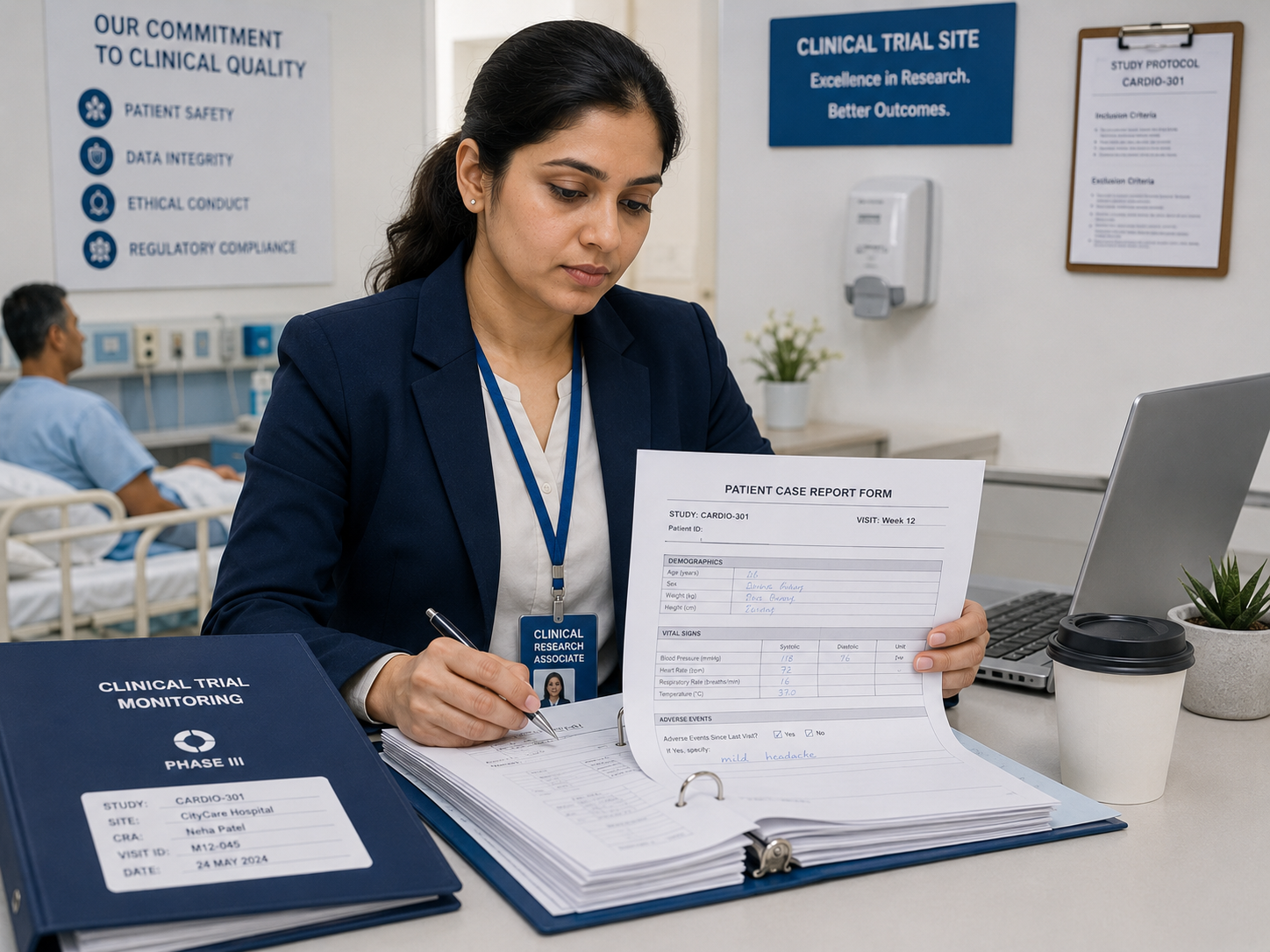
Runs outsourced preclinical toxicology/pharmacology studies and clinical trials (Phase I-IV) for sponsor companies - covering site selection, patient recruitment, data management and regulatory submission support under Good Clinical Practice (GCP).
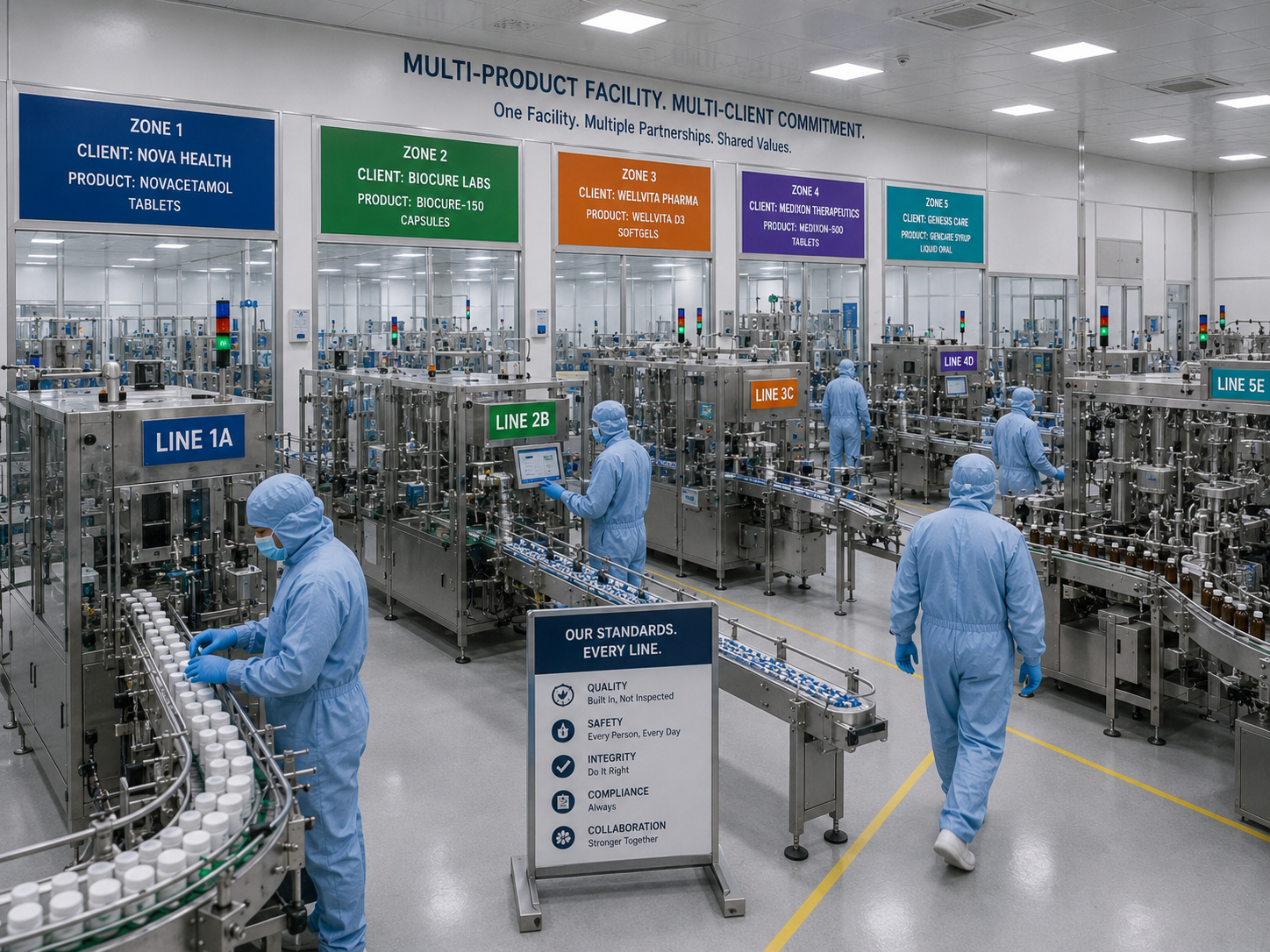
Manufactures API, intermediates or finished dosage forms (tablets, capsules, injectables) for innovator and generic companies, running multiple client product lines under segregated cGMP batch records and individual quality/technical agreements.
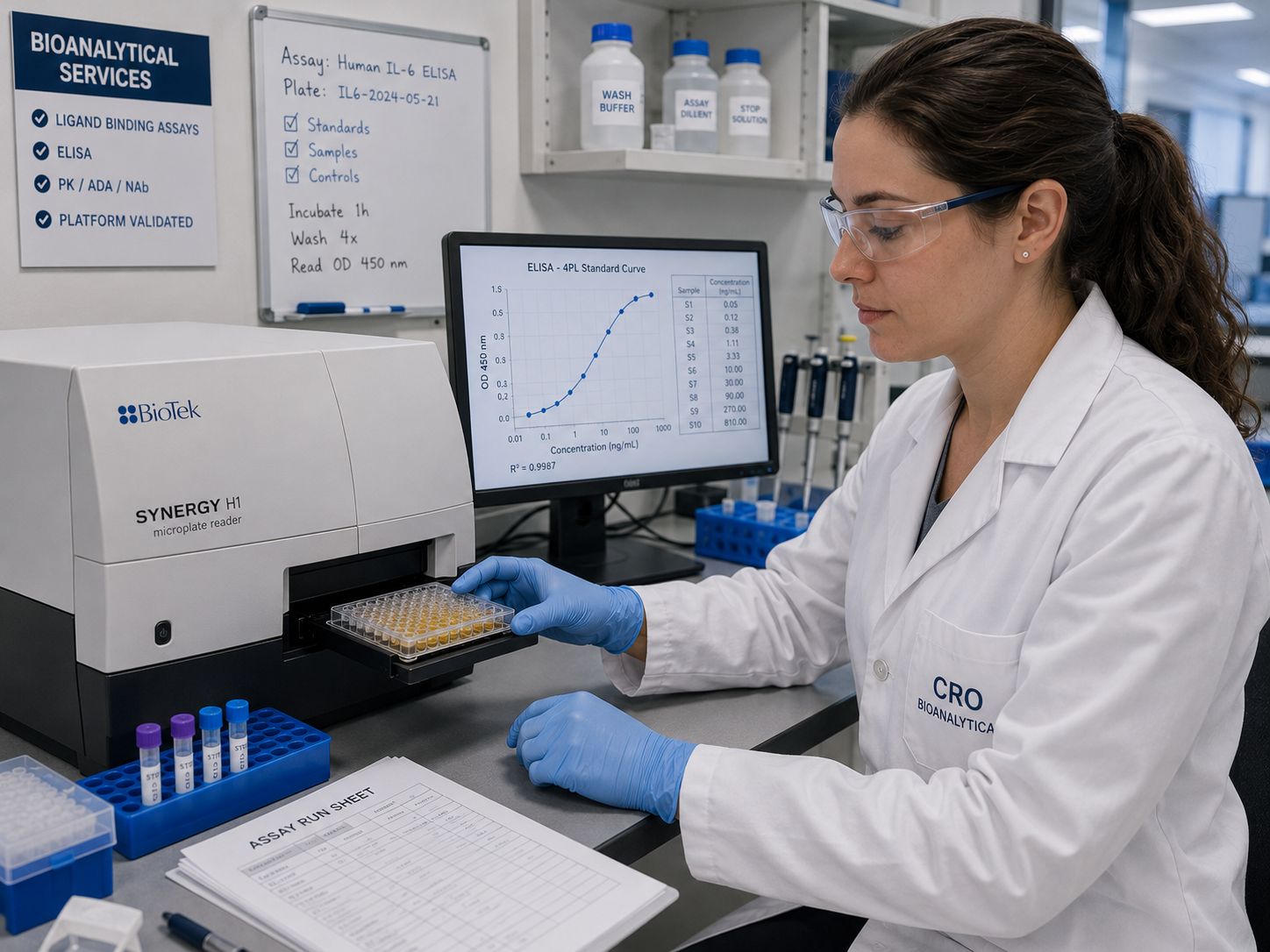
Runs preclinical biologics studies (immunogenicity, pharmacokinetics) and early-phase clinical trials for biologics/biosimilar sponsors, requiring bioanalytical expertise beyond standard small-molecule CRO work.
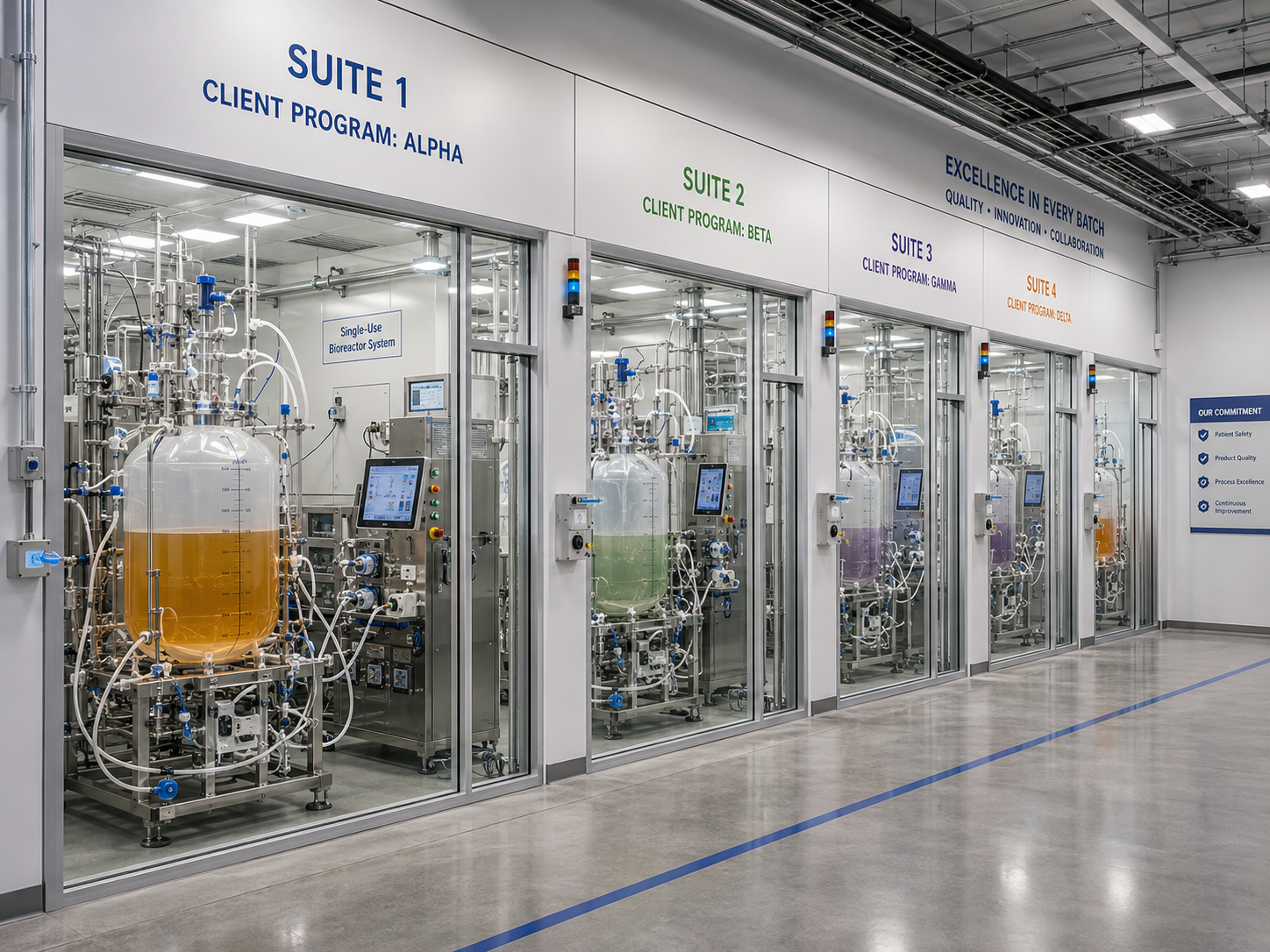
Provides cell line development, process development and GMP biomanufacturing capacity (upstream, downstream, fill-finish) to biotech sponsors without their own plants, working across multiple client cell lines and processes concurrently.
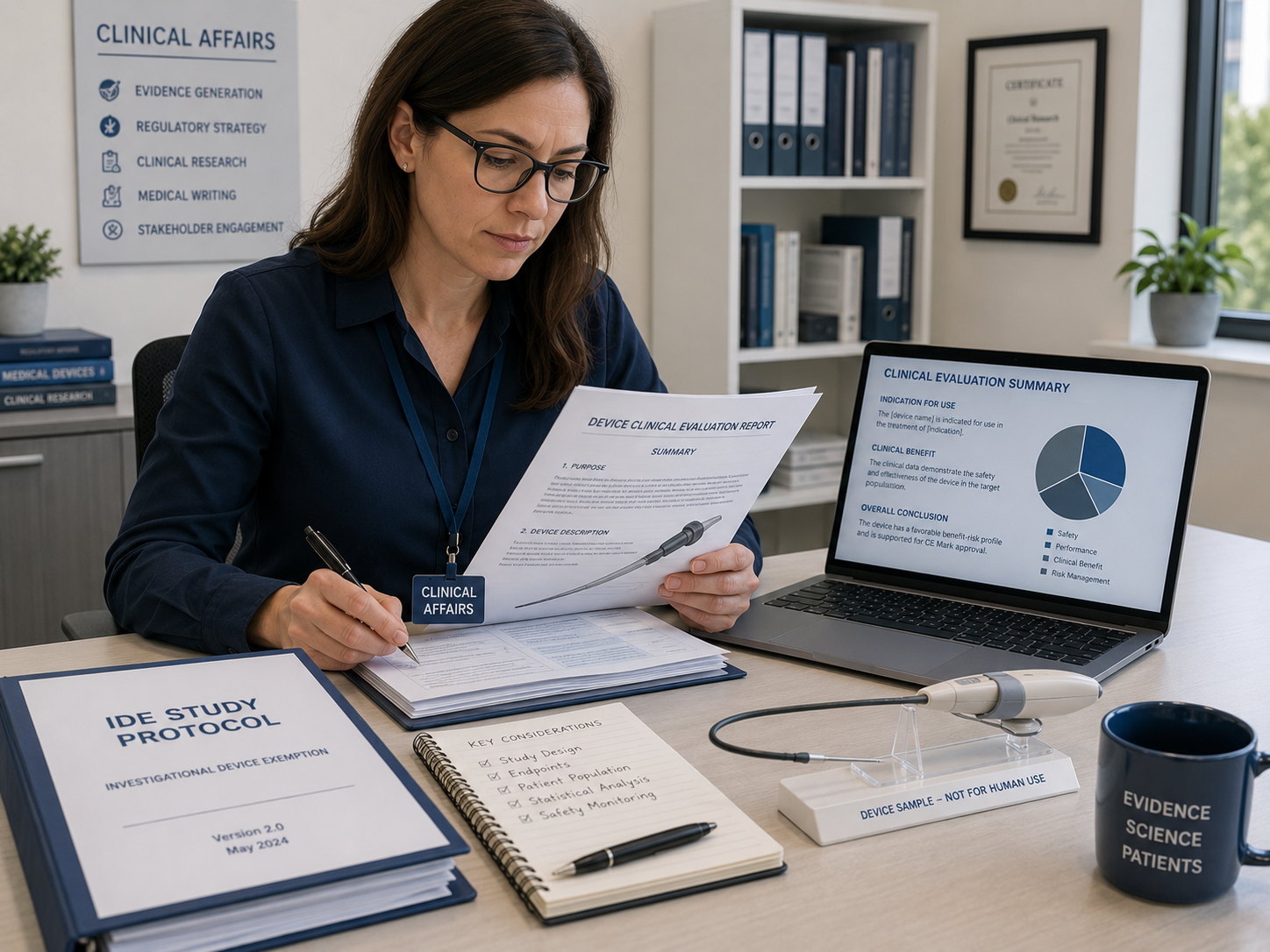
Manages clinical evaluations, Investigational Device Exemption (IDE) studies and post-market clinical follow-up studies for device manufacturers, coordinating with hospital sites and regulatory bodies.
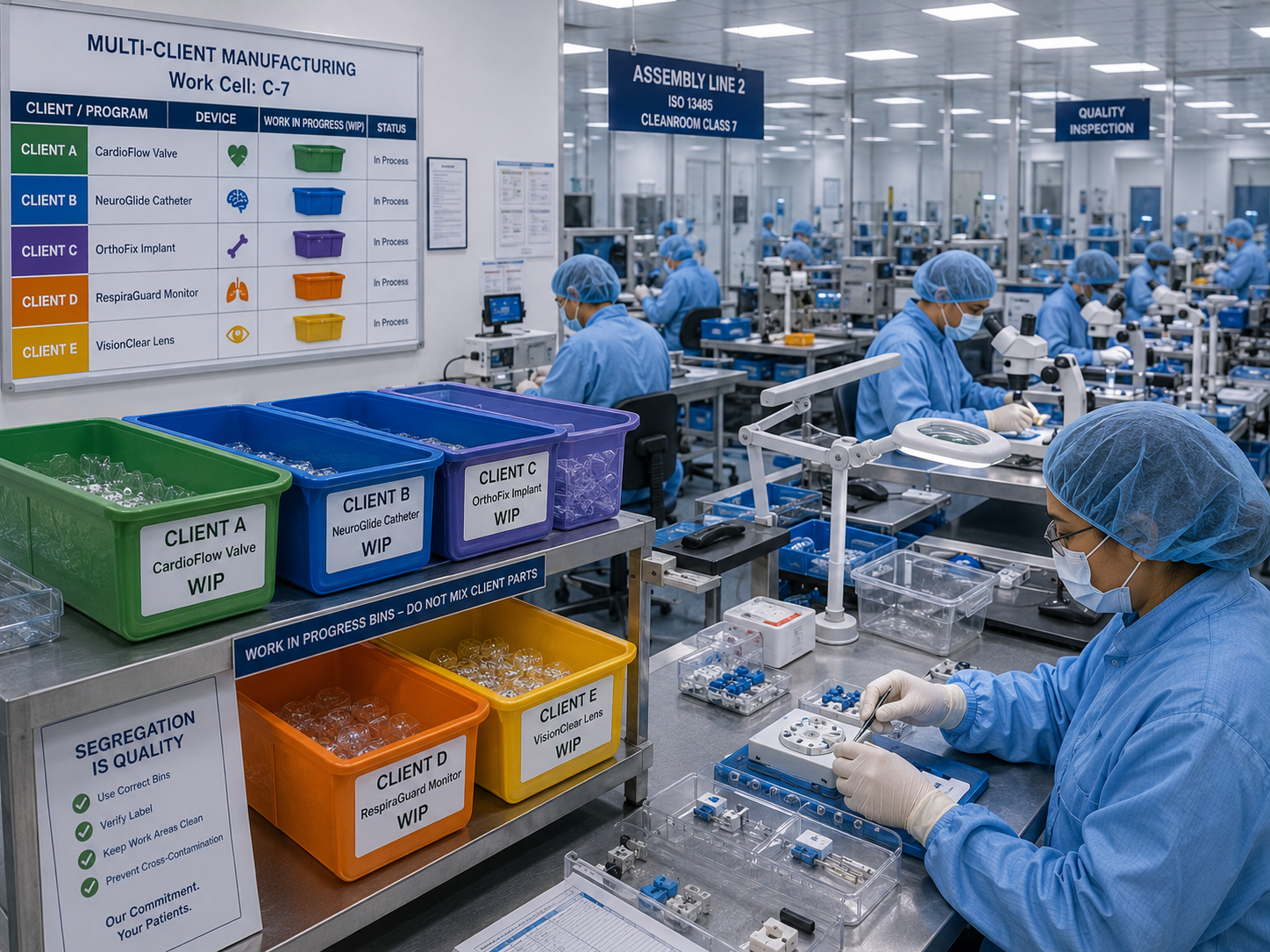
Manufactures components or full devices to a customer's design file under strict change control, often running multiple client programs on shared cleanroom assembly lines with segregated work-in-progress tracking.
Whatever the industry, these six mechanics sit underneath every CRO/CMO job description. We use them as the actual hiring criteria, not the industry label on a resume.
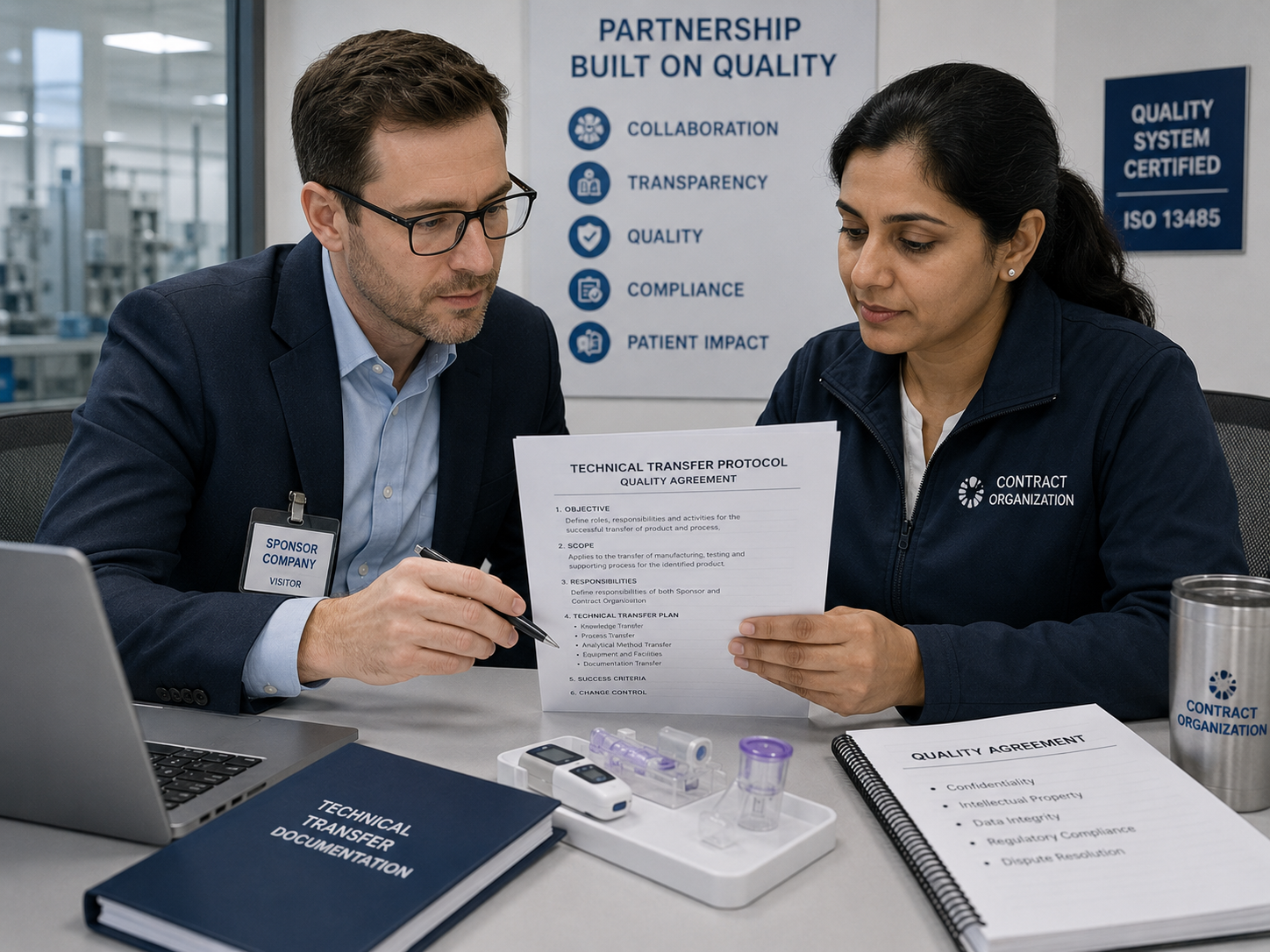
Every client relationship starts with a formal document defining exactly who is responsible for what - specifications, testing, deviation handling, change control and audit rights. New hires are trained against these agreements, not just internal SOPs.
A process, method or design moves from the sponsor (or from lab to plant) into the CRO/CMO's own systems, with side-by-side comparability testing before the receiving site is allowed to run it independently.
Multiple clients' materials, documentation and sometimes physical space are kept demonstrably separate, so one client's audit or investigation never exposes another client's confidential information.
Staff routinely work under multiple overlapping NDAs and are trained to keep client information, formulations and designs siloed even from colleagues on other client programs within the same building.
Because a single CRO/CMO site can be audited independently by each of its clients as well as by regulators (USFDA, EU-GMP, CDSCO, notified bodies), audit-readiness is a constant operating state, not a periodic event.
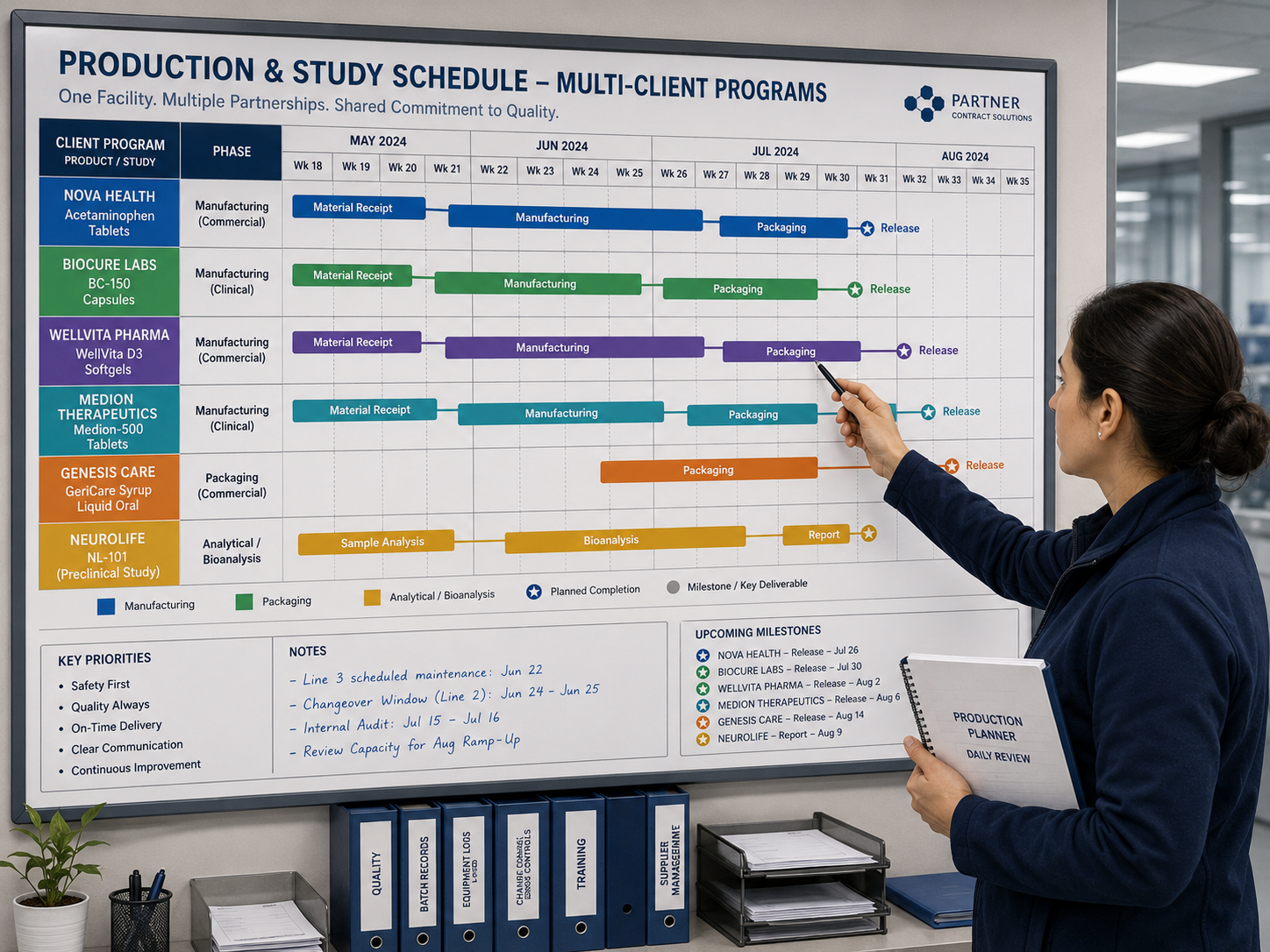
Production or study slots are sold to multiple clients against a shared calendar, so planning and scheduling roles carry real commercial weight - a scheduling error can breach a client contract, not just an internal target.
We recruit CRO/CMO roles across pharma, biotech and medical devices from one desk, so we already understand how the same job title (e.g. Tech Transfer Engineer) differs by industry.
We ask candidates to walk through an actual technology transfer or comparability study they worked on, rather than accepting "GMP experience" as a sufficient signal on its own.
Our shortlists are filtered for people who have genuinely operated under simultaneous client and regulatory audits, the single hardest thing to simulate in an interview.
We understand the NDA-heavy, IP-siloed nature of contract work and manage outreach and references accordingly, without exposing a candidate's current client relationships.
Tell us which segment - pharma, biotech or device, research or manufacturing - and we'll map it to the right technical profile.
Hire Talent